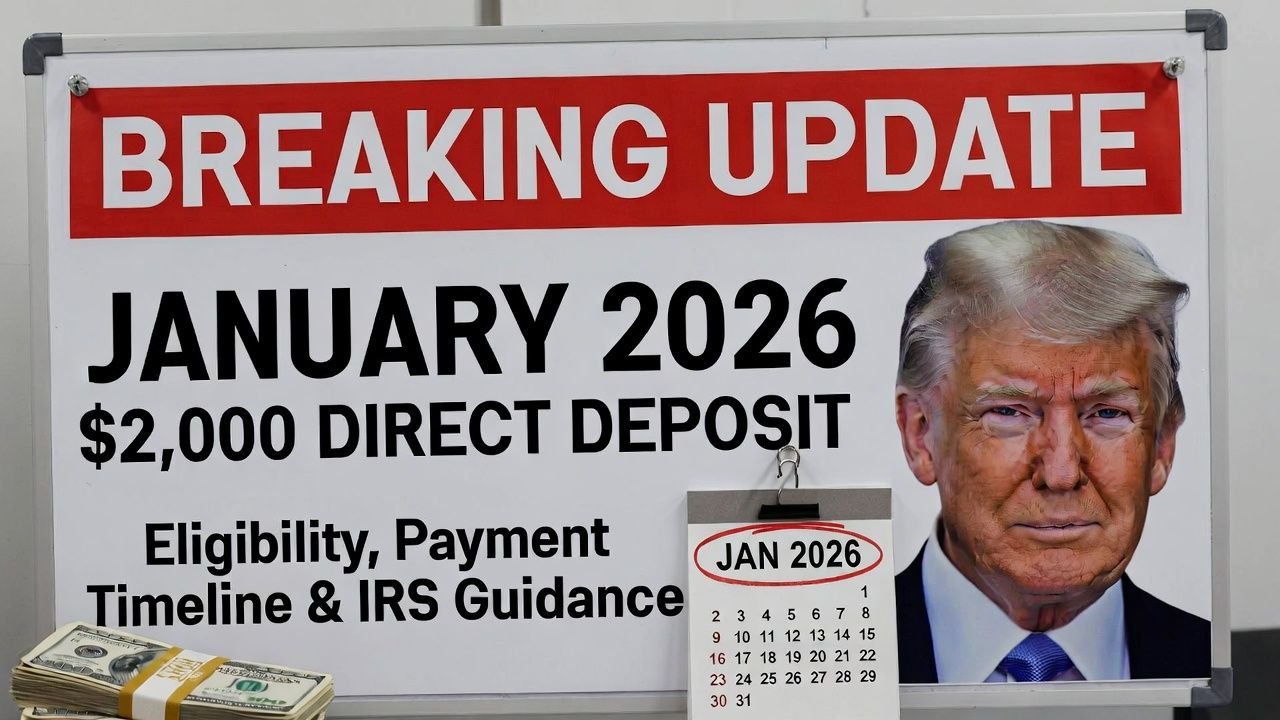
As January 2026 begins, many American households are closely monitoring their bank accounts following a season of high holiday spending and rising everyday costs. Social media is filled with claims of a $2,000 federal direct deposit arriving on a specific date, creating confusion and unrealistic expectations. The reality is more nuanced. While there is no brand-new nationwide stimulus program approved for everyone, many people may still receive federal deposits totaling around $2,000 from existing programs.
Is There a New $2,000 Stimulus in January 2026?
There is no newly approved universal $2,000 stimulus check for all Americans in January 2026. Congress has not passed a fresh relief package like those issued during the pandemic years. However, the $2,000 figure circulating online is not entirely misleading. It reflects the combined value of legitimate federal payments that are commonly issued in January, including IRS tax refunds, refundable tax credits, and Social Security benefits.
Where the $2,000 Payments Are Actually Coming From
Several federal sources can lead to deposits near $2,000:
- Tax refunds: Taxpayers who filed early and qualify for refundable credits, such as the Earned Income Tax Credit (EITC) or Child Tax Credit, often receive refunds reaching $2,000 or more.
- Social Security, SSI, and SSDI: Beneficiaries may receive monthly payments in January ranging from $1,500 to $2,500, depending on individual benefit amounts.
- IRS adjustments or back payments: Corrections from prior tax years or additional credits can result in lump-sum deposits during January.
These payments are part of routine federal processes rather than a new relief initiative.
Expected Payment Timing in January
There is no single date that applies to everyone. Payment schedules vary by program:
- Social Security and SSI payments: Typically issued in the first week of January, sometimes earlier due to holiday scheduling.
- IRS refunds: Tax returns are generally accepted beginning in mid-January. Refunds are often issued within about 21 days of acceptance. Early filers who submit accurate returns and choose direct deposit are most likely to see payments arrive between mid- and late January.
Who Is Most Likely to Receive These Payments
Eligibility depends on the specific program, not on a new stimulus rule. Groups most likely to receive deposits near $2,000 include:
- Early tax filers with refunds due
- Low- and middle-income families qualifying for refundable credits
- Social Security beneficiaries
- Taxpayers owed IRS adjustments or corrections
U.S. citizens, residents, and qualified non-citizens who filed taxes in recent years are generally included.
How to Avoid Delays and Scams
To ensure timely receipt:
- File electronically and choose direct deposit
- Confirm that banking and contact information is accurate with the IRS
- Use only official IRS tools to track payments
- Be cautious of scams; the IRS never requests personal or banking information via text messages, emails, or social media
Understanding the Real Picture
The $2,000 figure circulating online is not a new stimulus payment but reflects real money many Americans may receive from existing federal programs. Knowing the source of these payments can help reduce confusion, manage expectations, and prevent misinformation from spreading.
Disclaimer: This article is for informational purposes only and does not constitute financial, tax, or legal advice. Federal payment amounts, eligibility rules, and deposit timelines depend on individual circumstances and official government policies. Always rely on official IRS and federal government resources for accurate, up-to-date information.