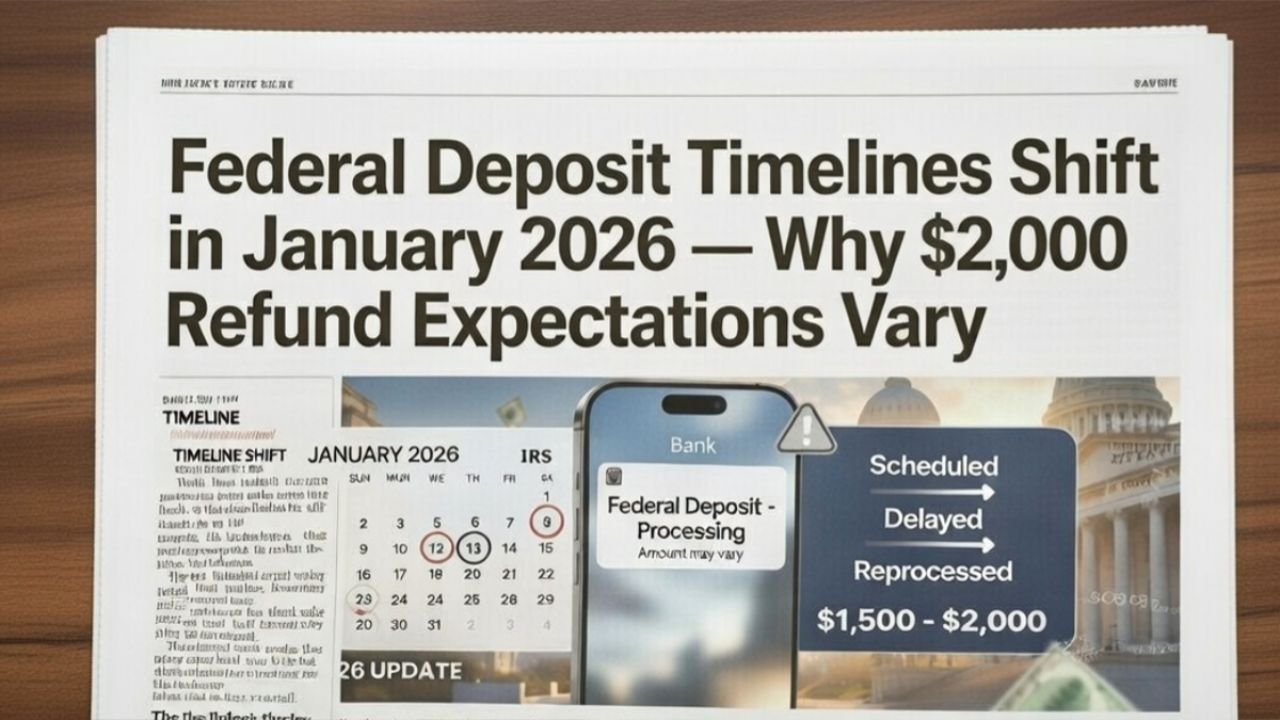
In early 2026, discussions about a potential $2,000 federal deposit have attracted widespread attention across the United States. Social media posts, videos, and online articles have fueled the perception that a direct payment may soon appear in bank accounts. For many Americans facing higher living costs, this idea is hopeful. However, it is crucial to separate confirmed information from speculation to avoid financial missteps.
What People Mean by a “$2,000 Federal Deposit”
The term “$2,000 federal deposit” is not the official designation of any current government program. Instead, it is a general reference used when discussing possible federal payments similar to past stimulus checks. Historically, such payments were issued through emergency legislation, refundable tax credits, or targeted assistance programs. Because these payments were widely distributed and impactful, many people now expect similar measures whenever living costs rise or economic challenges occur.
Why the Topic Keeps Coming Back
Interest in a $2,000 deposit typically spikes during periods of inflation and rising household expenses. Housing, healthcare, food, and transportation costs continue to strain family budgets. Previous stimulus experiences have shaped public expectations, leading to heightened attention whenever federal announcements hint at potential relief. Online content can amplify these perceptions, making isolated payments or adjustments appear as nationwide programs when they are not.
How Federal Payments Are Actually Issued
Federal payments are delivered through established and secure channels:
- Direct deposits to bank accounts
- Paper checks mailed to registered addresses
- Prepaid debit cards for certain programs
Direct deposit is the fastest and most widely discussed method. Any legitimate federal payment would be issued via one of these channels and officially announced by the responsible agency.
Why Some People See Deposits Near $2,000
Even without a new federal program, some individuals may notice deposits around $2,000. These typically originate from existing systems, such as:
- Tax refunds or credits
- Social Security or Supplemental Security Income adjustments
- Targeted assistance programs for low- or middle-income households
These payments are personalized, depending on eligibility and prior participation, and are not universal. Not every recipient will see a payment near this amount.
Eligibility Depends on the Program
If a future $2,000 deposit were implemented, eligibility rules would vary by program. Past measures were based on factors such as:
- Income thresholds
- Tax filing status
- Household size
- Benefit enrollment
Keeping personal and banking information current with federal agencies ensures that eligible individuals receive payments promptly once a program is approved.
How to Verify Reliable Information
Only official government websites and announcements provide trustworthy guidance. Agencies will clearly outline eligibility, timelines, and tracking tools for any new payment program. Unverified sources, emails, or social media messages requesting personal information should be treated as potential scams.
Financial Planning and Caution
Relying on unconfirmed payments for budgeting can be risky. Households should plan using guaranteed income sources. If a federal deposit does arrive in the future, it can be strategically used to:
- Cover essential living expenses
- Reduce debt or overdue bills
- Build an emergency savings buffer
Sound planning ensures that any temporary relief contributes to longer-term financial stability.
Final Understanding
As of January 2026, there is no confirmed universal $2,000 federal deposit program. Most deposits individuals receive are tied to existing benefit systems, tax refunds, or adjustments—not new stimulus measures. Staying informed through official sources is the safest way to avoid confusion and misinformation.
Disclaimer:
This article is for informational purposes only and does not constitute financial, tax, or legal advice. No universal $2,000 federal deposit program has been confirmed. Federal policies, eligibility rules, and payment schedules may change. Readers should rely solely on official government communications before making financial decisions and remain cautious of unverified claims.